


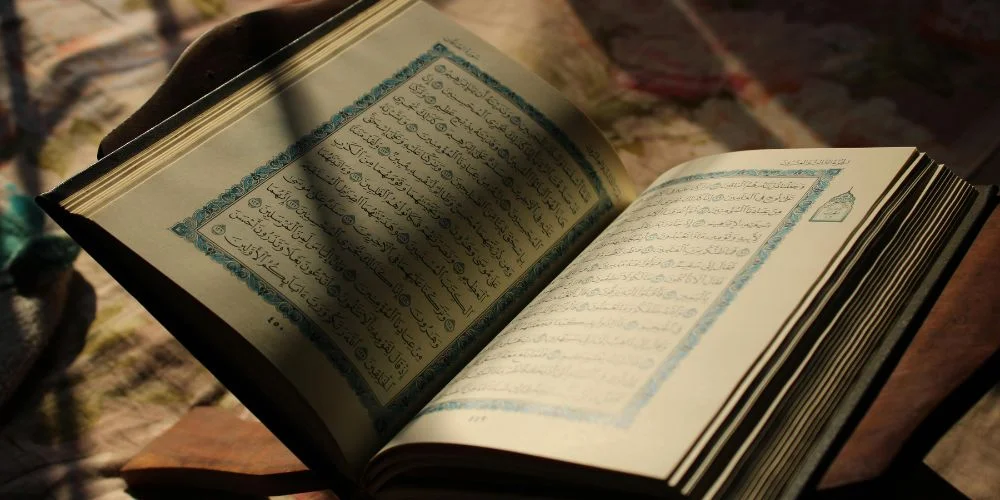
Islam gave women specific, legally grounded rights more than fourteen centuries ago. Not vague moral suggestions. Actual documented positions on property, inheritance, marriage consent, education, and financial independence.
In many cases these rights preceded what women in other parts of the world wouldn’t gain for another thousand years.
Now, Quran Class is built around the belief that understanding Islam properly means actually going to the source rather than inheriting someone else’s interpretation of it.
Money, Ownership And Independence
Her Income Is Hers
Under Islamic law, a woman’s earnings belong entirely to her. She carries no obligation to contribute to household expenses. The husband bears that financial responsibility alone, regardless of what either of them earns. Her money stays hers whether she works outside the home or not.
This isn’t a progressive reinterpretation of old text. It’s what the Quran has always said.
Mehr Is a Legal Right
Mehr, the bridal gift given by the husband at the time of marriage, is not symbolic. It’s not a gesture. It is legally hers from the moment it’s agreed upon. It cannot be reclaimed. No family pressure, no cultural norm has any Islamic basis to take it back from her.
Treating it as optional is a cultural habit that directly contradicts Islamic law.
Owning Property Was Always Permitted
A Muslim woman can own land, run a business, invest her money, keep her savings separate from her husband’s. She does not need male approval to do any of these things. Islamic jurisprudence has always recognized her as a fully independent financial individual.
Knowledge Was Never Restricted by Gender
The Prophet Muhammad PBUH said seeking knowledge is an obligation on every Muslim. No gender qualifier. No footnote.
Women in early Islamic history weren’t passive recipients of religious instruction. They were scholars. Hadith narrators. Teachers who male students traveled long distances to study under directly. Aisha RA narrated thousands of hadiths that form a core part of Islamic knowledge today.
For those who want to engage with that tradition seriously, Islamic Studies Courses offer structured, teacher-led learning grounded in proper scholarship rather than cultural assumptions.
What Islam Requires in Marriage
Consent Is a Condition
This one is not subtle. A nikah without the woman’s full, explicit consent is not valid. It isn’t a stricter interpretation of Islamic law to say this. It is the baseline position across every major school of Islamic jurisprudence without exception.
A marriage entered into without her consent isn’t a conservative nikah. It isn’t a nikah at all.
She Can End a Marriage Too
Khul’ is the process by which a woman initiates divorce in Islam. Under the right circumstances, it can be granted without the husband’s agreement, through a qualified scholar. This right has been part of Islamic law for over a thousand years. It did not need to be introduced. It was already there.
On Inheritance Shares
The Quran specifies inheritance shares precisely. The common criticism is that women receive less than men in certain scenarios, which is treated as evidence of inequality baked into the system.
What that reading leaves out is context. Under Islamic law the full financial obligation of the household falls on the husband. Women receive their inheritance share with no financial obligations attached to it. The man’s larger share in some cases reflects larger mandatory financial burdens, not elevated status. When the full picture sits on the table, the structure holds together as a balanced system.
Worship Carries Equal Weight
Women pray, fast, give zakat, perform Hajj, and recite the Quran. The spiritual standing is equal. The rewards are equal. The obligations are equal.
Learning to recite the Quran properly is part of that practice, and it has always been for every Muslim. For those who want qualified instruction in a format that actually works around a real schedule, Quran on Skype connects students with certified teachers wherever they are.
Culture Is Not the Same as Scripture
Forced marriages. Barriers to education. Restrictions on working. These exist in some Muslim-majority societies, and they are genuinely harmful.
They do not have roots in the Quran. Holding Islam accountable for them is like judging a law by the behavior of people who ignored it entirely. The two things need to be separated before any honest conversation about women’s rights in Islam can happen.
Go To The Text Directly
Political commentary won’t give you a straight answer on this. Neither will inherit cultural assumptions.
The Quran is not a difficult document to access. The rights it grants women are documented, specific, and fourteen centuries old. What has often failed those rights is not religion. It’s the distance between what the text says and what some people decided to practice in its name.

