



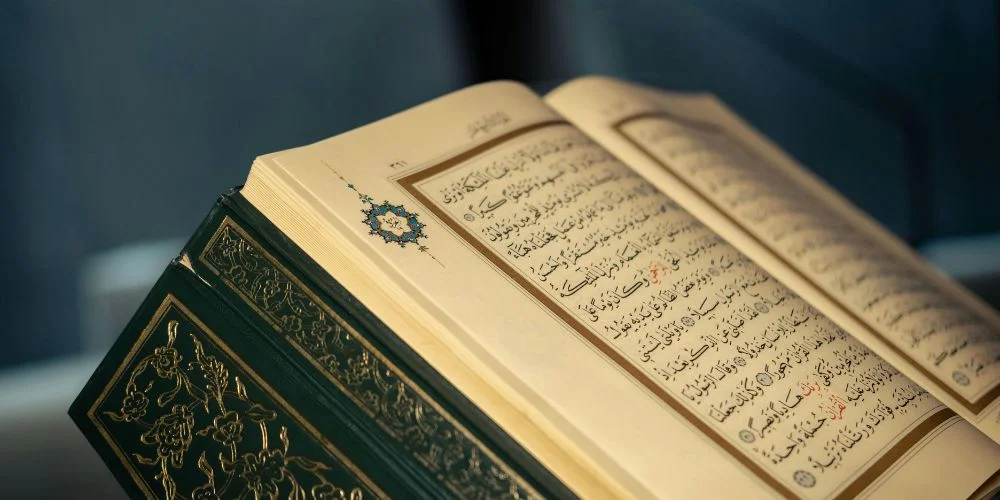
Two different structures. Same compound. Not the same thing. The fact that this confusion exists at scale, not just among non-Muslims but among Muslims who would say they care deeply about this site, tells you something about how shallow most people’s actual knowledge of Al-Aqsa goes. The name is famous. The story behind it is not. That story is worth knowing. Quran Class takes it seriously. So here it is, from the beginning.
Getting the Geography Basics Sorted
The compound is called Al-Haram Al-Sharif. Roughly 144,000 square metres inside the Old City of Jerusalem. Several buildings sit within it.
The Dome of the Rock is one of them. Finished 691 CE. Gold dome. Built over the Foundation Stone. Genuinely one of the most remarkable surviving examples of early Islamic architecture anywhere in the world. It matters enormously.
But scholars, when they say Al-Aqsa, mean the mosque building with the grey dome. That is where congregational prayers happen. That is the structure.
How to Name It
Al-Aqsa means the farthest mosque. Not a name that scholars invented or that tradition gradually settled on. It comes from the first verse of Surah Al-Isra, chapter seventeen of the Quran, where Allah says He took His servant by night from Al-Masjid Al-Haram to Al-Masjid Al-Aqsa, whose surroundings He had blessed.
First verse. Seventeenth chapter. The blessing on its surroundings stated directly by Allah. Not hinted at or implied. Said outright.
That is the introduction Al-Aqsa gets in the Quran. Worth letting that land before moving on.
Deeper History Than You Might Imagine
Abu Dharr asked the Prophet (S.A.W) which mosque was built first on earth. Al-Masjid Al-Haram. Which came after. Al-Masjid Al-Aqsa. Forty years between the two.
This hadith sits in Bukhari and Muslim. If you know anything about hadith classification, you know those are not sources that get questioned lightly. In addition, what they place on the record is extraordinary. Forty years after the Kaabah, Al-Aqsa was established. Both at the very beginning of human history according to Islamic understanding.
Not ancient history in the conventional sense. Earlier.
Look at the Prophets Connected to This Land
Ibrahim (A.S), Dawud (A.S), Sulaiman (A.S), Zakariyya (A.S), Yahya (A.S) and Isa (A.S). Every single one connected to the land where Al-Aqsa sits. On top of that, none of these are figures the Quran mentions briefly and moves on from. These are prophets the Quran circles back to, elaborates on, builds entire chapters around.
Sulaiman built the sacred precinct. When construction was complete, he made three supplications. One was this: that anyone who came to this mosque seeking nothing but prayer would leave it as free of sfin as a newborn. Completely clean.
The Prophet, peace be upon him, heard this supplication and said he hoped it had been accepted.
That line. That single expression of hope from the Prophet (S.A.W) about a prayer made by a previous prophet for this particular place. It is more revealing than a hundred general statements about Al-Aqsa being holy. The Prophet (S.A.W) had a personal relationship with the significance of this site. That line shows it.
The Night Journey Did Not Go Straight to the Heavens
People know the broad outline of the Isra and Miraj. Which is the Meeting of the Prophet (S.A.W) at various levels. The command for five daily prayers.
What tends to get rushed past is the first part before any heavens were visited, before any ascension happened, the Prophet (S.A.W) came to Al-Aqsa. Moreover, in that compound he led prayer. Every prophet who had ever been sent stood in congregation behind him. Ibrahim (A.S), Musa (A.S) and Isa (A.S). The final Prophet (S.A.W) of Allah leading every prophet who came before him. In one prayer. At this location.
Then the journey upward began why does this get glossed over so often because it deserves actual attention. Al-Aqsa was not a stopover. It was the gathering place chosen for something that had never happened in human history. The entire line of prophethood, assembled, led by its final member, before an ascension unlike anything before or after.
Seventeen Months of Something People Forget
After the migration to Madinah, Muslims prayed toward Jerusalem. Five prayers a day, every day, for seventeen months. Every Muslim alive at the time.
The qibla changed through Quranic revelation in Surah Al-Baqarah. The Prophet (S.A.W) was literally mid-prayer when the command came. He turned toward Makkah on the spot. But the same passage addressed those seventeen months directly. Allah stated that He would not allow that faith to go to waste. Those prayers counted in full. The direction changed. The worth of Al-Aqsa did not diminish because of it.
Think about those seventeen months in real terms. That is not a transitional blip. That is the period when the Muslim community was building itself in Madinah. Establishing its daily rhythm. Forming its collective identity. Every single act of prayer across that entire period was oriented toward Al-Aqsa.
People talk about Al-Aqsa as if it was always on the edges of Islamic history. It was at the centre. Literally.
The Prophet (S.A.W) Declared Three, Not Four
Three mosques worth deliberately travelling to Al-Masjid Al-Haram. The Prophet (S.A.W) Mosque in Madinah. Al-Masjid Al-Aqsa.
Prayer in Al-Aqsa carries a reward that is fundamentally different from prayer in an ordinary masjid. The narrations differ slightly on the precise figure but none of them treat it as ordinary. Because it is not.
Al-Aqsa appears in the Prophet’s descriptions of what is still ahead. Major signs before the Day of Judgement connected to this land. Things that have not yet happened.
So the site exists in Islamic tradition across all three directions of time. In the past, going back to the beginning of human existence. In the present, as one of only three mosques the Prophet (S.A.W) named this way. In the future, tied to events still to come.
Conclusion
Most people know the name. Most people have the wrong building in their head. Beyond that, the knowledge tends to get thin quickly.
But the depth of Al-Aqsa is not hidden. It is in the first verse of a Quranic chapter named after the night journey. It is in a hadith in Bukhari, placing its founding at the start of human existence. It is in the personal hope the Prophet (S.A.W) expressed about Sulaiman’s supplication. It is in an unprecedented gathering of all the prophets in its compound before the ascension. It is in seventeen months of every Muslim on earth facing this direction in prayer. It is in a short list of three mosques that the Prophet (S.A.W) said were worth a journey. It is in descriptions of what is still coming.
None of that is obscure. It just requires someone to actually sit with it. For those wanting to come to the Quranic verses about Al-Aqsa directly, through recitation rather than through summaries, the Quran Recitation Course at Quran Class builds that relationship with the text. Now, for those wanting the Arabic itself, the Arabic Language Course is where that starts, because some things do not fully survive translation.

